ServicesCommercial Roofing
Commercial Roofing in Norwalk for Low-Slope Buildings
We repair and replace roofs on shops, offices, small warehouses and multi-unit buildings. Before we quote, we find out what membrane you have, what is failing and why. Then we lay out TPO, modified bitumen, built-up and coating options with their trade-offs in writing.
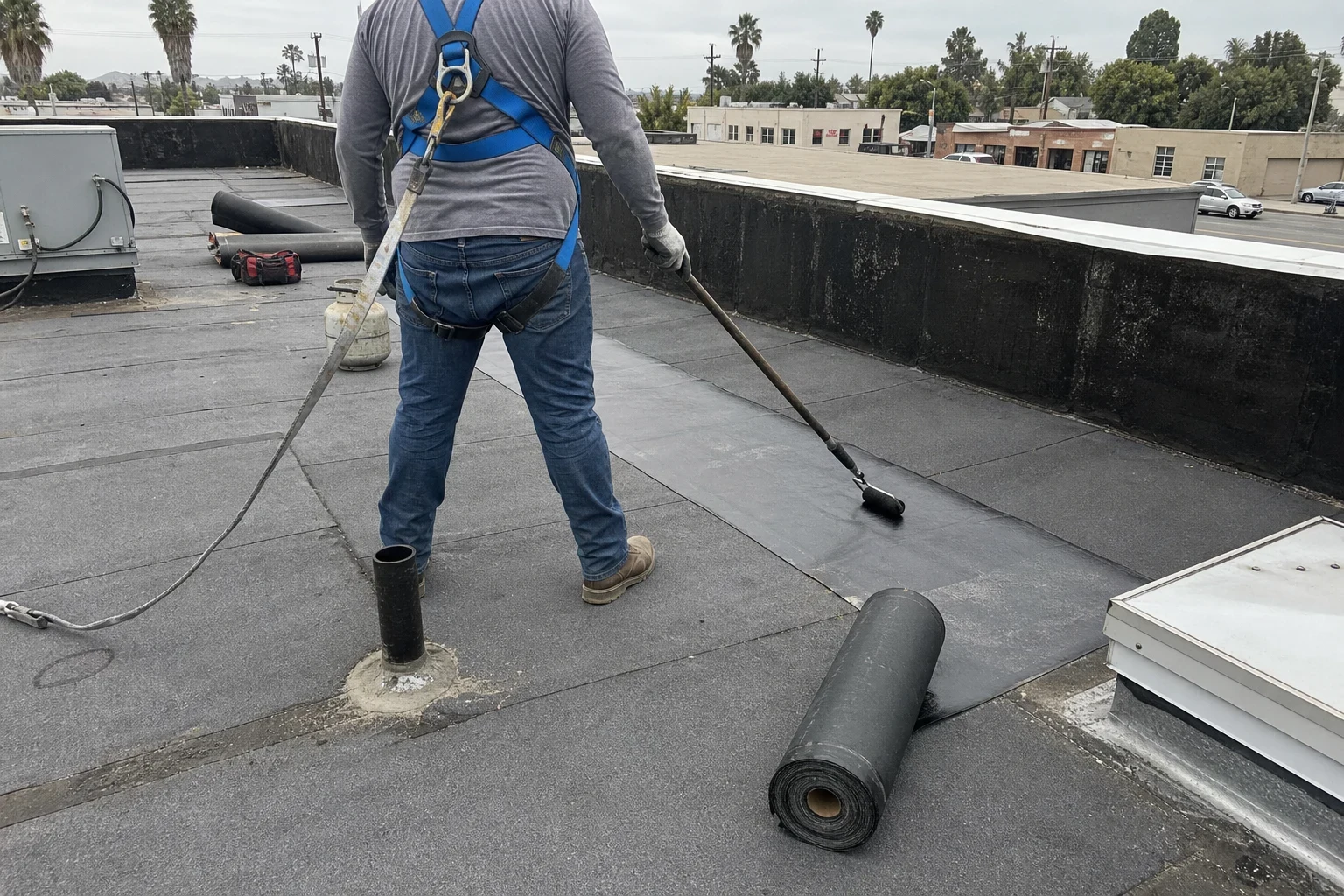
What Commercial Roofing Covers
Most commercial buildings sit under a low-slope roof, which works very differently from a pitched shingle or tile roof. Water does not run off quickly. It moves slowly toward drains and scuppers, so the membrane has to stay watertight at every seam, and the slope built into the deck or insulation has to actually carry water away.
We work on the systems you find on these buildings: single-ply TPO and PVC, torch-down and self-adhered modified bitumen, older built-up tar and gravel roofs, and elastomeric or silicone coatings applied over a sound membrane. Each one ages in its own way. TPO seams can let go when the welds were rushed. Modified bitumen cracks and loses granules under years of strong sun. Built-up roofs blister when moisture gets trapped between the plies.
Commercial work is the right call when leaks keep returning in the same areas, when an inspection turns up wet insulation, or when you are planning a reroof and want to know which membrane fits your building, budget and how long you plan to own it. For a small residential flat section, our flat roofing page is the better place to start.
What the Work Includes
Membrane and seam repairs
We reweld or patch TPO and PVC seams, cut out and replace blistered sections of built-up roofs, and heat in new cap sheet on modified bitumen. Repairs use material compatible with what is already there, because mixing incompatible membranes causes new leaks.
Single-ply replacement
TPO and PVC go down either fully adhered or mechanically fastened over new insulation board. White single-ply reflects much of the sun's heat, which helps meet California's Title 24 cool-roof rules on a low-slope reroof.
Modified bitumen and built-up roofs
These multi-layer systems tolerate foot traffic well and suit roofs with frequent equipment service. We repair them or replace them in kind when that is the better fit.
Coatings over a sound roof
A silicone or acrylic coating can add years to a membrane that is aged but dry. We only recommend one after testing confirms the insulation underneath is not wet.
Drains, scuppers and edge metal
We clear and reflash drains, rebuild scuppers and replace rusted coping and edge metal, where many commercial leaks actually start.
Penetrations and equipment curbs
HVAC curbs, vent stacks and conduit supports get new flashing or pitch pans so they stop letting water in around their bases.
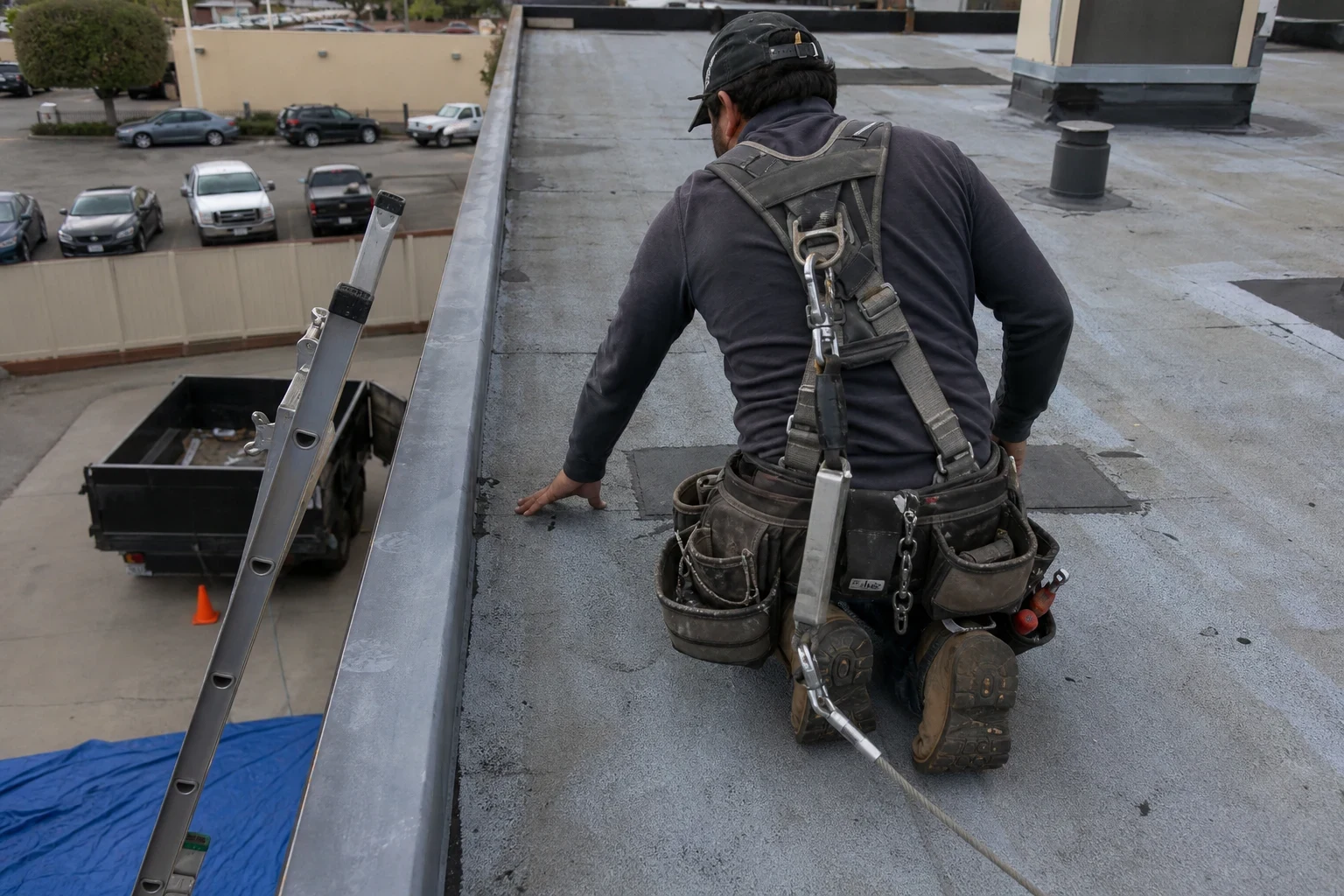
Signs Your Commercial Roof Needs Attention
- Water still standing after two days
- Ponding that lingers 48 hours after rain points to a sagging deck, crushed insulation or a clogged drain. Standing water speeds up membrane breakdown.
- Open or lifting seams
- Edges peeling back on single-ply, or laps separating on modified bitumen, are direct paths for water.
- Blisters and alligator cracking
- Bubbles in built-up roofs mean trapped moisture. A surface crazed like reptile skin means the asphalt has dried out from sun exposure.
- Ceiling stains near rooftop units
- Leaks that show up under HVAC equipment usually trace back to curb flashing or condensate lines, not the field of the roof.
- Soft spots underfoot
- A roof that feels spongy when you walk it often has wet insulation, which loses its insulating value and can rot the deck.
How a Commercial Roof Job Runs
- 1
Roof walk and core sample
We walk the whole roof, photograph problem areas and, when needed, cut a small core to see how many layers exist and whether the insulation is wet. The core gets patched the same visit.
- 2
Written options by material
You get a free written estimate that compares repair, coating and replacement where each makes sense, with the trade-offs of each membrane spelled out.
- 3
Permit and scheduling
We pull the permit for a reroof and plan the work around your business hours, deliveries and tenants so the building stays usable.
- 4
Work in sections
On a replacement, the crew strips only as much old roofing as it can cover with new membrane before quitting time. No section sits exposed to the weather overnight.
- 5
Final walk and cleanup
We water-test drains, walk the finished roof with you and clear debris from the roof, parking areas and dumpsters before we leave.
Where the Money Goes on a Low-Slope Roof
Roof area, measured in squares, sets the starting point. The condition below the membrane often decides the final figure, and you rarely see that from the ground. Each item shows up as its own line in your written estimate, so nothing hides inside a lump sum.
- Membrane choice
- Each system has its own material and installation labor, and each lasts a different number of years on the roof. PVC resists grease and chemical exposure better than the others, which matters over restaurants.
- Wet insulation and deck condition
- Saturated insulation must be cut out and replaced, and damaged decking repaired, before any new membrane goes on.
- Number of existing layers
- Code limits how many roofs can be stacked, so a building with two old layers usually needs a full tear-off.
- Drainage corrections
- Fixing ponding may call for tapered insulation, crickets or added drains.
- Rooftop equipment and access
- HVAC units to lift or reflash, parapet walls and limited crane or ladder access all add labor.
Commercial Roofing Questions
- Is a coating enough, or does the roof need replacing?
- The answer hinges on how dry the roof is underneath. On a membrane that is old but still sound, a coating seals it and bounces back sunlight. When moisture readings or a core sample turn up wet insulation, a coating only locks that water in, and a new roof is the straight answer.
- What membrane lasts longest under hard sun?
- White TPO and PVC send heat back off the roof, so the surface runs cooler and ages more slowly. Modified bitumen topped with a reflective cap sheet or coating stands up better to lots of foot traffic. We pick based on how the roof gets used, not only on the climate.
- Will I have to close while you work?
- In most cases, no. We go section by section, keep doors and parking open where possible, and time the loud tear-off for the hours that bother you least.
- Can you help with an insurance claim?
- Yes, we deal with your insurance claim directly. We document the damage with measurements and photos, and we are happy to be on the roof while the adjuster looks it over. Coverage under the policy is still up to your insurer.
- Can I finance the work?
- Yes, through Service Finance Company, subject to credit approval. Bring it up as we go over your written estimate and we will explain the terms and how to apply.
Find Out What Your Building's Roof Needs
We will walk the roof, check what is under the membrane and explain your material options in writing. We serve Norwalk and nearby cities including Downey, Cerritos, Whittier and La Mirada.