ServicesRoof Leak Repair
Roof Leak Repair in Norwalk
Water seldom drips straight below the spot where it got in. We follow it uphill from the stain to its real entry, often a split pipe boot, rusted valley metal or brittle felt under tile, and repair it with materials suited to your roof.
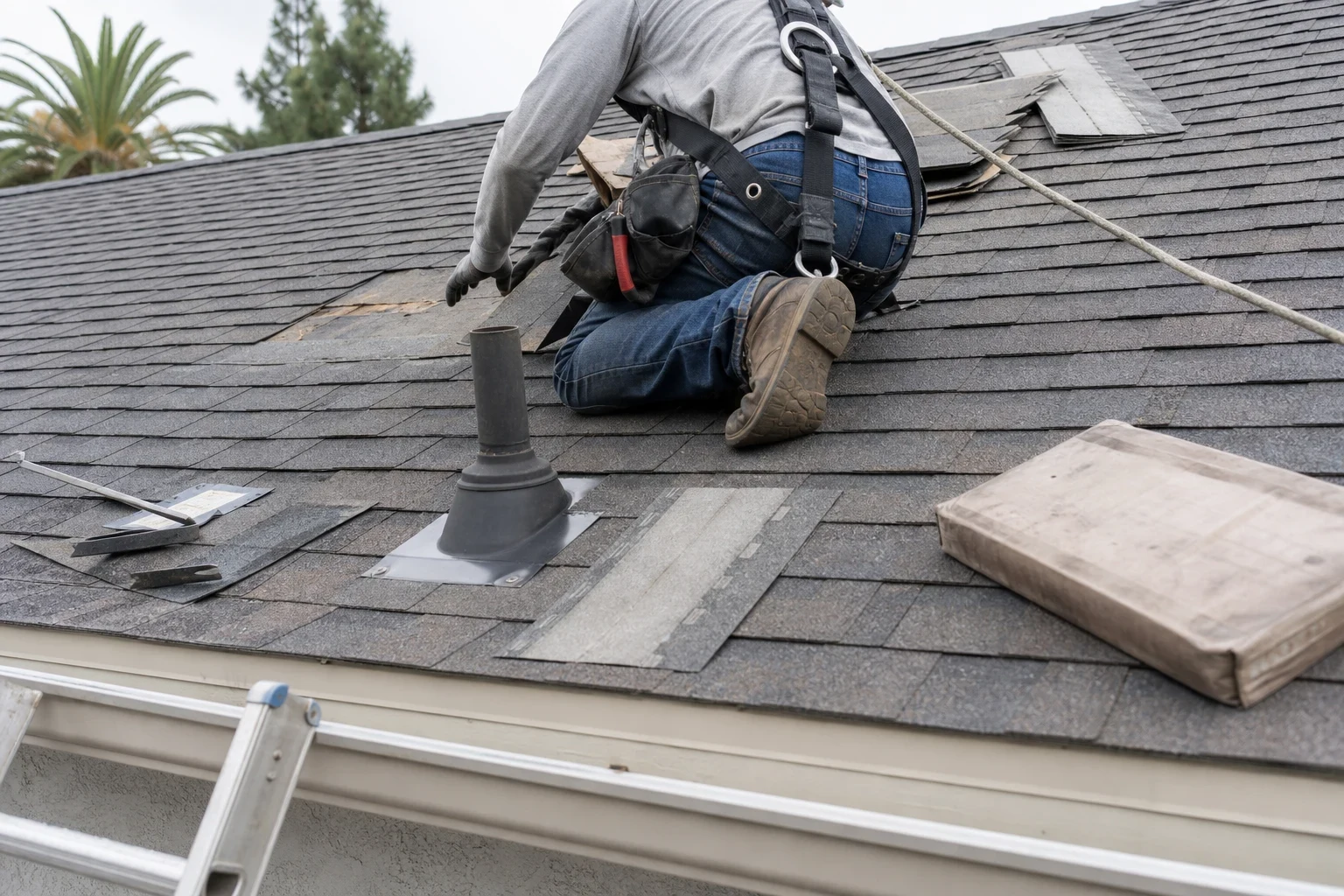
Finding the Entry Point Comes Before the Fix
Water that gets past the roof covering runs along the top of the decking, down a rafter or across the attic insulation before it drips. That is why a stain over the hallway can start at a vent six feet uphill. If a crew patches where the drip shows, the leak comes back with the next rain.
How a leak behaves depends on the material over it. Concrete and clay tile shed most water on their own, so a tile roof leak usually means the underlayment beneath has dried out and cracked. On composition shingle, the usual causes are exposed nail heads, lifted tabs and pipe boots whose rubber collar has split in the sun. Low-slope sections leak at seams, ponding spots and the edge where they meet a pitched roof.
Many homes around Norwalk carry a mix of these: a tile or shingle main roof with a low-slope patio cover or addition tied into it. We check each surface on its own terms, because the right repair for one is the wrong one for the next.
What Our Leak Repair Work Covers
Looking from the attic side
When the attic is reachable, we go up there first to check for darkened sheathing, wet insulation and pinpoints of daylight around nails. Water tracks on the underside of the plywood show the path it has been taking.
Roof surface tracing
On the roof we work uphill from the stain, checking flashing, penetrations and the covering itself. On tile, that means lifting pieces to see the felt and battens underneath.
Flashing and penetration repair
We replace split pipe boots, reseal or replace vent and skylight flashing, and refit step flashing and counterflashing where walls meet the roof. Sealant alone is a short-term answer on metal that has rusted through, so we replace the metal.
Underlayment and decking repair
If felt has failed under tile, we remove the tiles in the area, install new underlayment and reset the tile. Soft or delaminated plywood gets cut out and replaced before anything goes back on top.
Photos of what we found
You see the cause before you approve the repair. We photograph the damaged boot, the rotted deck or the cracked felt so the estimate makes sense.
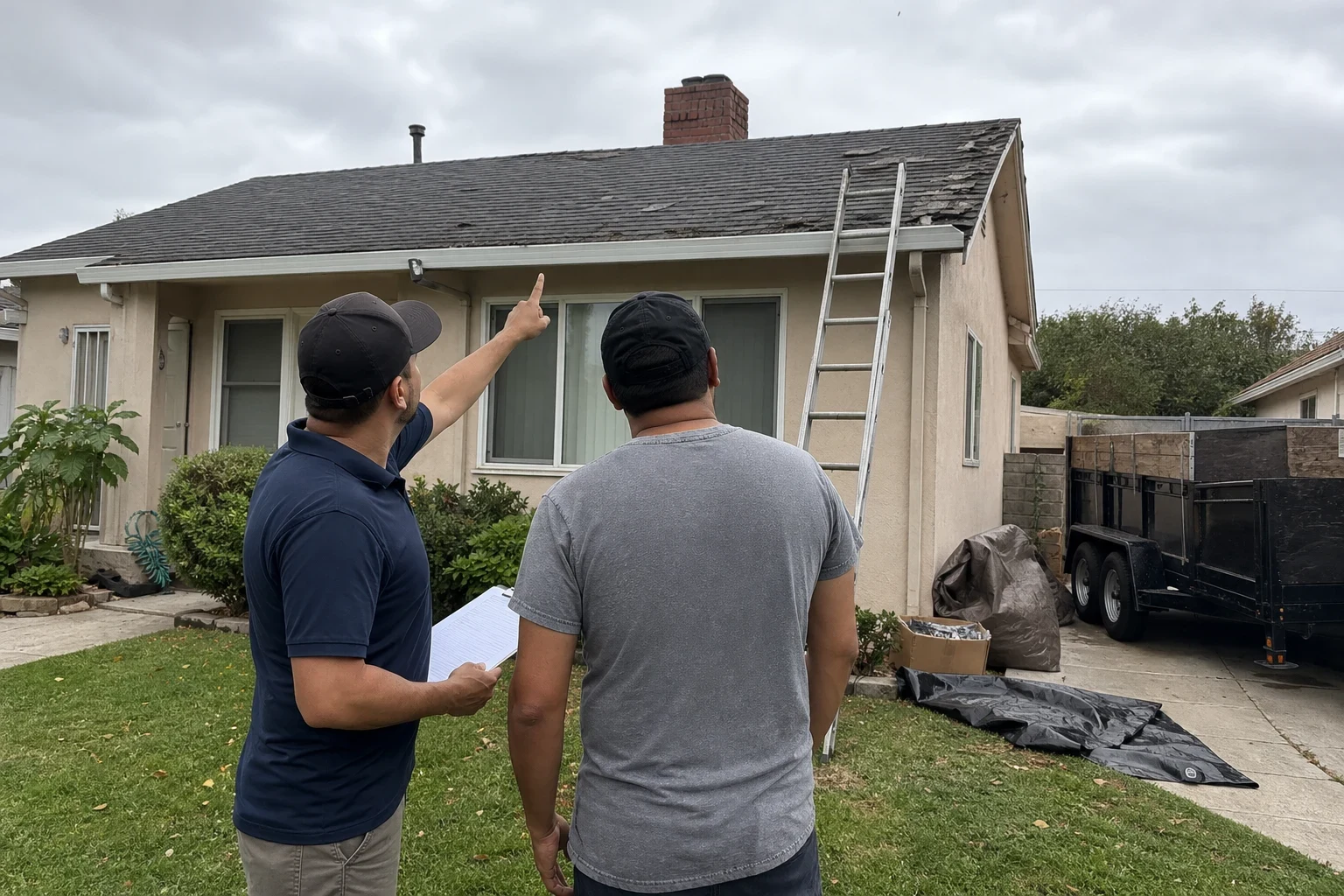
Warning Signs of a Roof Leak
- Ceiling marks with dark borders
- A water mark outlined by a darker edge has soaked and dried several times. The leak keeps coming back, even if one storm is when you first spotted it.
- Drips only in hard, wind-driven rain
- When water shows up only with strong wind, it is usually being pushed sideways under flashing or up past a short tile headlap. Light rain may never reveal it.
- Musty smell in a closet or attic
- Damp insulation and wood give off an odor before any stain reaches the drywall. It is worth a look before mold or decking rot sets in.
- Peeling paint near the eaves
- Blistered paint on fascia or soffits can point to water getting behind the drip edge or a gutter backing up under the first course.
- Cracked or slipped tiles
- A broken tile exposes underlayment to sun and rain directly. On an older tile roof, that felt may already be brittle, so a single crack can matter more than it looks.
- Granules in the downspouts
- Heavy granule loss on shingles leaves the asphalt mat exposed. Once it cracks, water finds the nail holes.
How a Leak Repair Day Runs
- 1
Phone call and free estimate visit
You tell us where the water shows and when. We come out, inspect the attic and roof, and give you a written estimate with the cause and the repair spelled out.
- 2
Setting up and protecting the area
We lay tarps over plantings and the work zone, set ladders on stable ground and stage materials so nothing sits on fragile tile.
- 3
Opening up and repairing
We remove only what is needed to reach the failure, replace damaged decking or felt, and install new flashing or boots. Removed tile is stacked and reset; broken pieces are replaced with the closest available match.
- 4
Water test and cleanup
Where it makes sense, we run a hose over the repaired area to confirm it holds. Then we clear debris, sweep for nails and show you photos of the finished repair.
What Moves the Cost of a Leak Repair
Most of the price comes from what is under the surface and how much has to come off to reach it. A pipe boot swap is a small job. Rotted decking under tile is a larger one. Your written estimate lists each part so you can see what you are paying for.
- Roof material
- Tile takes longer to remove and reset than shingle, and older tile profiles can be hard to match. Low-slope membranes need seam work with the right compatible product.
- Extent of hidden damage
- How far the water traveled decides how much felt, plywood or fascia needs replacing. We cannot price that exactly until we see it, which is why the inspection comes first.
- Where the leak sits
- Valleys, chimneys and wall junctions involve more flashing pieces than an open field of roof. Steep or high sections also take more setup.
- Overall roof condition
- If the underlayment is failing across the whole roof, patching one spot may only move the leak. We will tell you plainly when roof repair still makes sense and when roof replacement is the better spend.
Questions About Fixing a Leak
- Can't you just seal the spot that is leaking?
- Roof cement can work as a stopgap, but a few seasons of sun will crack it. Most leaks trace to a part that failed, such as a split boot or rusted flashing. Swapping out that part is what keeps the water out for good.
- Why is water getting in when my tile looks fine?
- The tile mainly shields the roof from sun and weather. The underlayment below it does the waterproofing, and that felt can dry out and split long before the tile wears out. We lift tiles where we suspect the problem to inspect it.
- Why does my roof leak only during the first heavy storm of the year?
- Over the long dry months, sealant shrinks, valleys and gutters collect debris and small cracks open up. The first big rain hits all of those spots together. A roof check before the rainy season can find them ahead of time.
- Is a leak covered by my insurance?
- That depends on what caused it. Sudden storm damage is often handled differently from gradual wear. We work with your insurance claim directly, supply photos of what we find and explain the damage, and your adjuster makes the coverage call.
- Is financing available for a bigger repair?
- Yes, through Service Finance Company, subject to credit approval. Bring it up during the estimate visit and we will show you that option alongside the repair scope so you can compare them together.
Find Out Where the Water Is Coming From
We will check your attic and roof, show you the cause in photos and give you a written estimate for the fix.