ServicesUrgent Roof Repair
Urgent Roof Repair in Norwalk
A branch through the shingles, tiles knocked loose by Santa Ana winds, or water dripping through a ceiling during a winter storm. We stop more water from getting in with a cover suited to your tile, shingle or flat roof. Then we repair the damaged section properly once it is dry and scoped.
Stop the Water First, Repair It Right Second
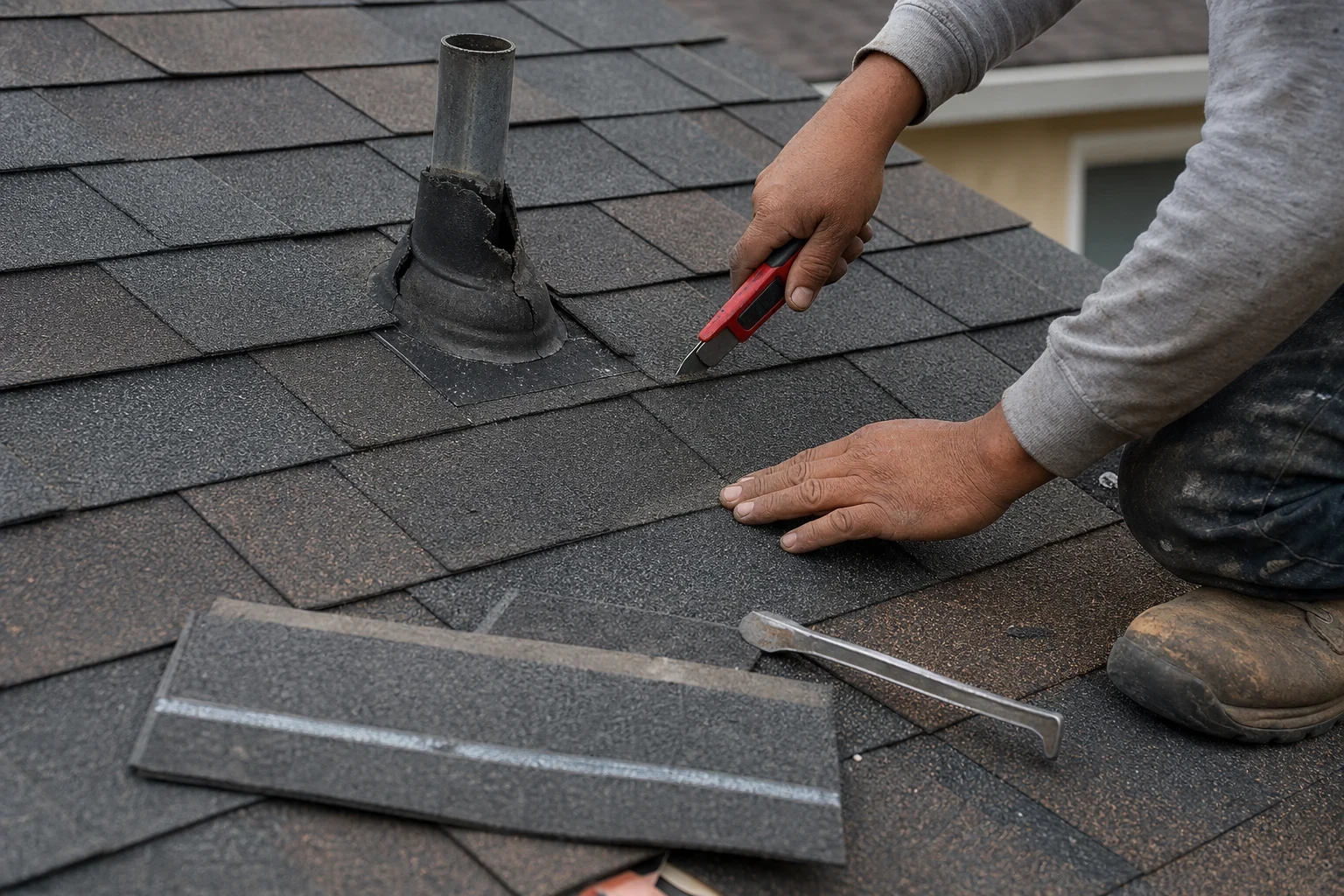
Urgent roof repair is a two-part job. The first part keeps water out of your home with a tarp, a temporary patch or a reset of displaced tiles, done without creating new damage. The second part is the permanent repair. We scope it once we can see the decking and underlayment clearly.
Your roofing material decides how both parts go. Concrete and clay tile cracks under a careless step, so a fix can break the tile next to the one being replaced. Asphalt shingles soften in heat and tear if they are pried up wrong. A flat roof with a split membrane can hold wet insulation underneath, and sealing over it traps the moisture.
When the inspection shows damage across much of the roof, you will hear that from us directly, along with an honest view of whether storm damage repair or a full roof replacement makes more sense than another patch.
What the Work Covers
- Temporary weatherproofing
- We wrap the tarp edge around wood battens and fasten through the battens, not through good shingles or tile. That keeps the cover tight in wind and leaves fewer holes to seal later.
- Tile reset and replacement
- Slipped or broken concrete and clay tiles are lifted so we can check the felt underneath. Sound tiles are reset, broken ones are matched, and rusted nails or hooks are replaced.
- Shingle and flashing repair
- Torn or lifted shingles are replaced with a matching profile and color where one is available. Pulled step flashing and loose pipe boots are refastened or replaced, because those joints are where wind-driven rain usually gets in.
- Decking check
- We probe wet plywood or older skip sheathing for softness. Rotted sections are cut back to the rafters and replaced, so the new roofing has solid wood to nail into.
- Flat roof patching
- Punctures and split seams in modified bitumen or built-up roofs are cut back, dried and patched with a compatible membrane. Mixing products that don't bond leads to blisters and delamination.
- Before-and-after photos
- We photograph the damage before anything is moved and again once the repair is done. Your insurer will want to see the original condition, and we coordinate with your claim directly while the adjuster sets coverage.
Signs the Damage Can't Wait
A ceiling stain that keeps growing
A stain that spreads after each rain means water is reaching the drywall. Wet insulation above it loses its value and can start to mold.
Roofing pieces in the yard
Whole shingles, tile fragments or strips of flashing on the ground mean the roof has an open spot somewhere above.
Daylight or drips in the attic
If you can see light through the roof deck, or you hear water during a storm, the underlayment is no longer doing its job.
Impact from a limb or debris
A fallen branch can crack rafters and decking even when the surface damage looks small. It needs a look from the attic side too.
A soft or sagging area
A dip in the roof line usually means wet or broken sheathing. Keep everyone off that section and out of the room below it.
How an Urgent Repair Gets Priced
Most urgent jobs carry two prices: one for the temporary cover and one for the permanent fix. They sit on separate lines of the estimate so you can see each charge. Payments over time are possible through Service Finance Company, subject to credit approval.
Your roofing material
Tile must be handled piece by piece, so it takes more time per square foot than shingles. On flat roofs, cost turns on whether water has soaked the insulation beneath the membrane.
Damage under the surface
Rotted decking, soaked felt or a cracked rafter adds lumber and labor. We can price it only after the top layer comes off.
Matching older pieces
Out-of-production tile shapes and older shingle colors can be hard to find. Salvaged or close-match pieces change both the cost and how the patch looks.
Getting up to the roof
Steep pitches, two-story walls and side yards barely wide enough for a ladder add setup, fall protection and hours on the roof. A low single-story house goes quicker.
From First Call to Finished Roof
- 1
Describe the damage
Let us know where water is coming through, what hit the roof if you know, and whether it is tile, shingle or flat. We agree on a visit time and suggest simple ways to protect belongings indoors until we arrive.
- 2
Inspection and temporary cover
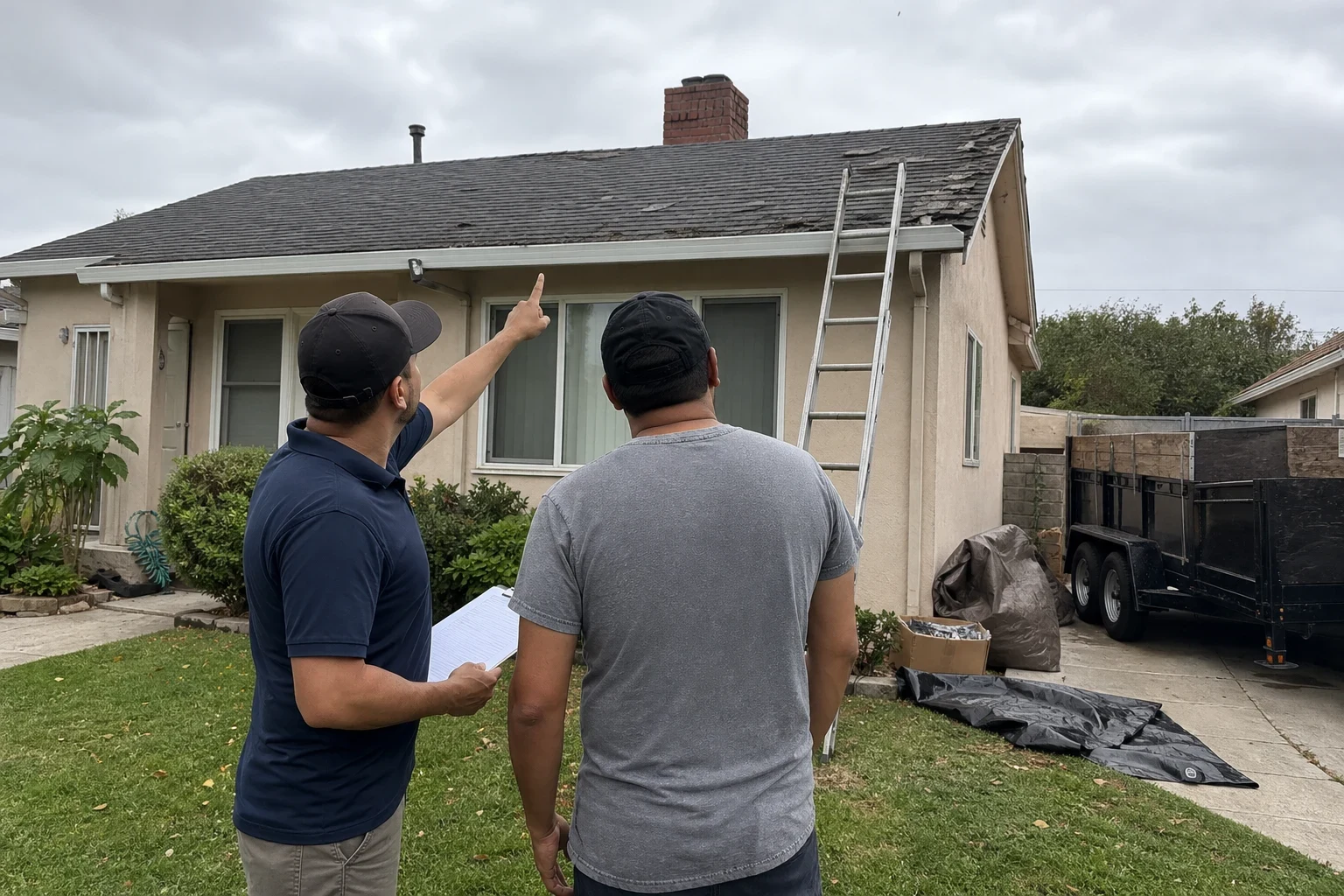
We check the damaged area from the roof and the attic, take photos, and install a tarp or temporary patch suited to the roof type if the opening is letting water in.
- 3
Repair scope on paper
Once we know how far the damage goes, the permanent fix goes into a free estimate you can keep. It names the materials, the amount of decking to be replaced and the parts of the roof that can stay as they are.
- 4
Permanent repair and cleanup
Once the roof is dry, we remove the temporary cover, repair the underlayment, decking and surface, then sweep the yard for nails and debris.
Common Questions About Urgent Repairs
Should I put a tarp up on my own?
We'd ask you not to. A wet roof is slippery, and nails driven through the middle of a tarp make fresh holes. Put buckets under drips, move valuables out of the way and let us handle the roof.
Is the tarp a permanent fix?
No. It just needs to hold while the roof dries and the repair is planned. Sun breaks down the plastic and wind works the fasteners loose, so the real repair should follow quickly.
Will my insurance pay for this?
That turns on your policy and the cause. A sudden event like a limb dropping in a windstorm is often treated differently than slow wear. We photograph the damage and work with your claim directly, and the adjuster decides coverage.
Can you match my existing tiles?
In most cases, with the same profile from a supplier or from salvage. When there is no exact match, we can move original tiles from a hidden slope to the damaged area and put the closest match where it shows least.
Get the Damage Covered, Then Fixed Properly
Let us know where the water is showing up and whether your roof is tile, shingle or flat. We will look it over, cover the opening and put the lasting repair in writing.