ServicesFlat Roofing
Flat Roofing in Norwalk, Matched to the Right Membrane
A flat roof lives or dies by its membrane and its drainage. We install and replace TPO, modified bitumen and coated low-slope roofs on your home, and we explain why one material suits your roof better than another before you commit.
What Flat Roofing Covers and When It Makes Sense
Most flat roofs on homes aren't truly flat. They sit at a quarter inch of fall per foot or less, which is too shallow for shingles to shed water. That's why low-slope sections, like a rear addition, a carport, a garage or the deck over a patio, need a continuous membrane instead of overlapping pieces.
Around Norwalk, many of these sections still carry an old built-up roof of tar and gravel or a rolled asphalt sheet. Both harden and crack under years of strong sun, and both tend to hold water at low spots. When the surface is blistered, split at the seams or soft underfoot, patching usually buys months, not years. A new membrane over a sound, properly sloped deck is the lasting fix.
If only a small area has failed, our roof repair and roof leak repair pages cover spot work. This page is about rebuilding the low-slope roof itself.
What a Flat Roof Job Includes
Membrane choice, explained
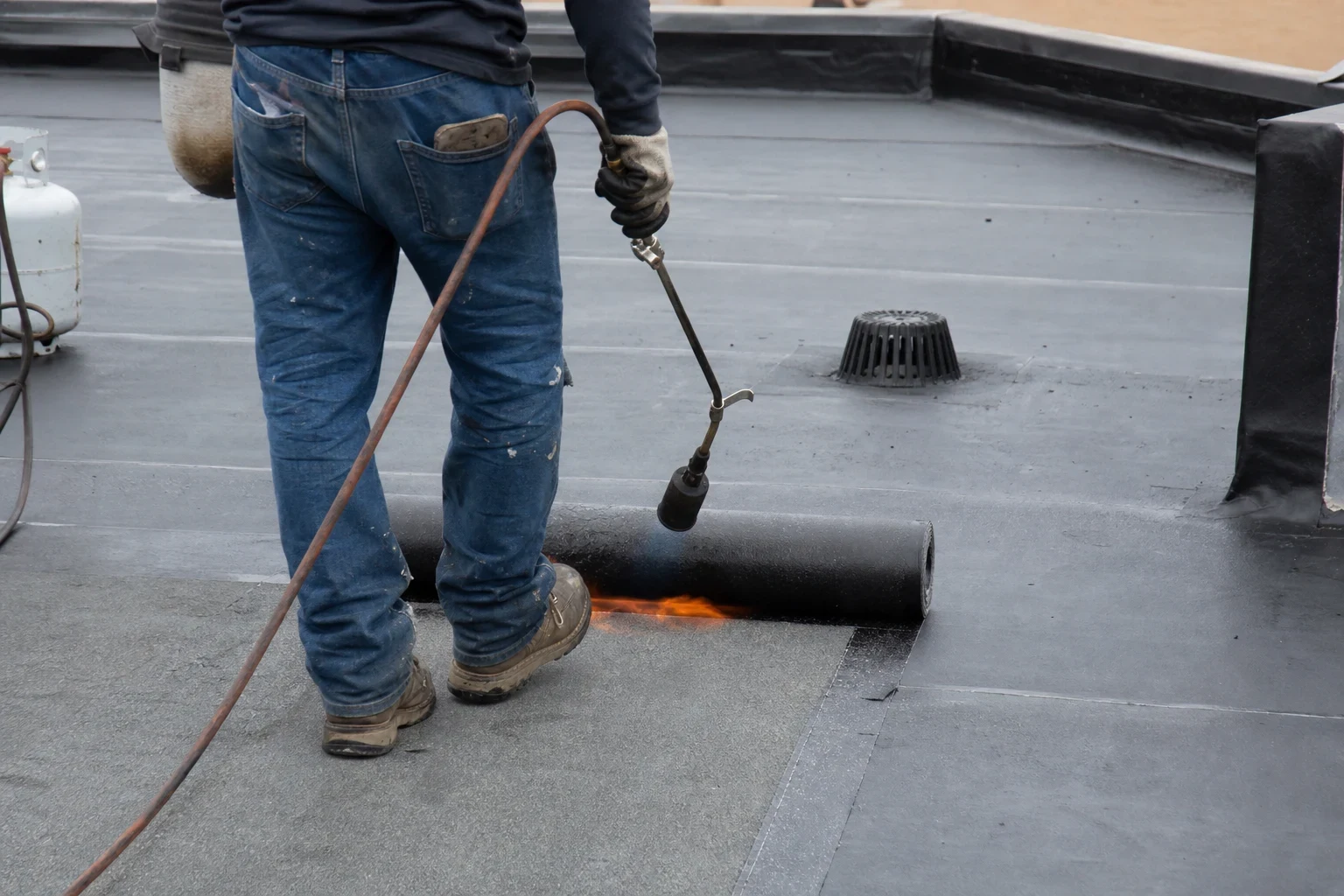
TPO is a white, heat-welded single-ply sheet that reflects sun and has strong seams. Modified bitumen is a thicker, asphalt-based sheet that handles foot traffic well and works around odd shapes. Silicone or acrylic coatings can extend a roof whose base is still sound. We lay out the trade-offs for your roof specifically.
Tear-off and deck check
We remove the old layers down to the deck and replace any plywood or boards that are rotted or delaminated. A new membrane over a soft deck will fail at the soft spots first.
Drainage correction
Water that sits more than 48 hours after rain shortens any membrane's life. We add tapered insulation, crickets or a re-pitched section so water moves toward the drain, scupper or gutter.
Edges, walls and penetrations
Drip edge, wall flashing, and the boots around vents and pipes are where flat roofs leak most. Each one gets welded or sealed into the membrane rather than caulked on top.
Cool roof compliance
California's energy code often calls for a reflective surface when a low-slope roof is replaced. We confirm what applies to your home and pull the permit.
Signs Your Flat Roof Needs Replacing
- Ponding that won't dry
- Puddles still standing two days after rain mean the deck has sagged or the slope was never right. The membrane under that water breaks down faster than the rest.
- Blisters and alligatoring
- Bubbles or a cracked, scaly surface on built-up and rolled roofs show trapped moisture and sun-baked asphalt that has lost its flexibility.
- Open seams or lifted edges
- Seams that peel back and edges pulling away from the drip edge let wind-driven rain run straight under the membrane.
- Soft or spongy spots
- If the roof gives when you step on it, water has likely reached the deck or the insulation. That calls for tear-off, not another coating.
- Ceiling stains below a low-slope area
- Water travels along a flat deck before it drips, so a stain often shows up away from the actual opening. A roof inspection traces it back.
- Patches on top of patches
- Layers of roof cement and mismatched repairs trap water and make the next leak harder to find.
From First Visit to Final Inspection
- 1
Roof walk and moisture probe
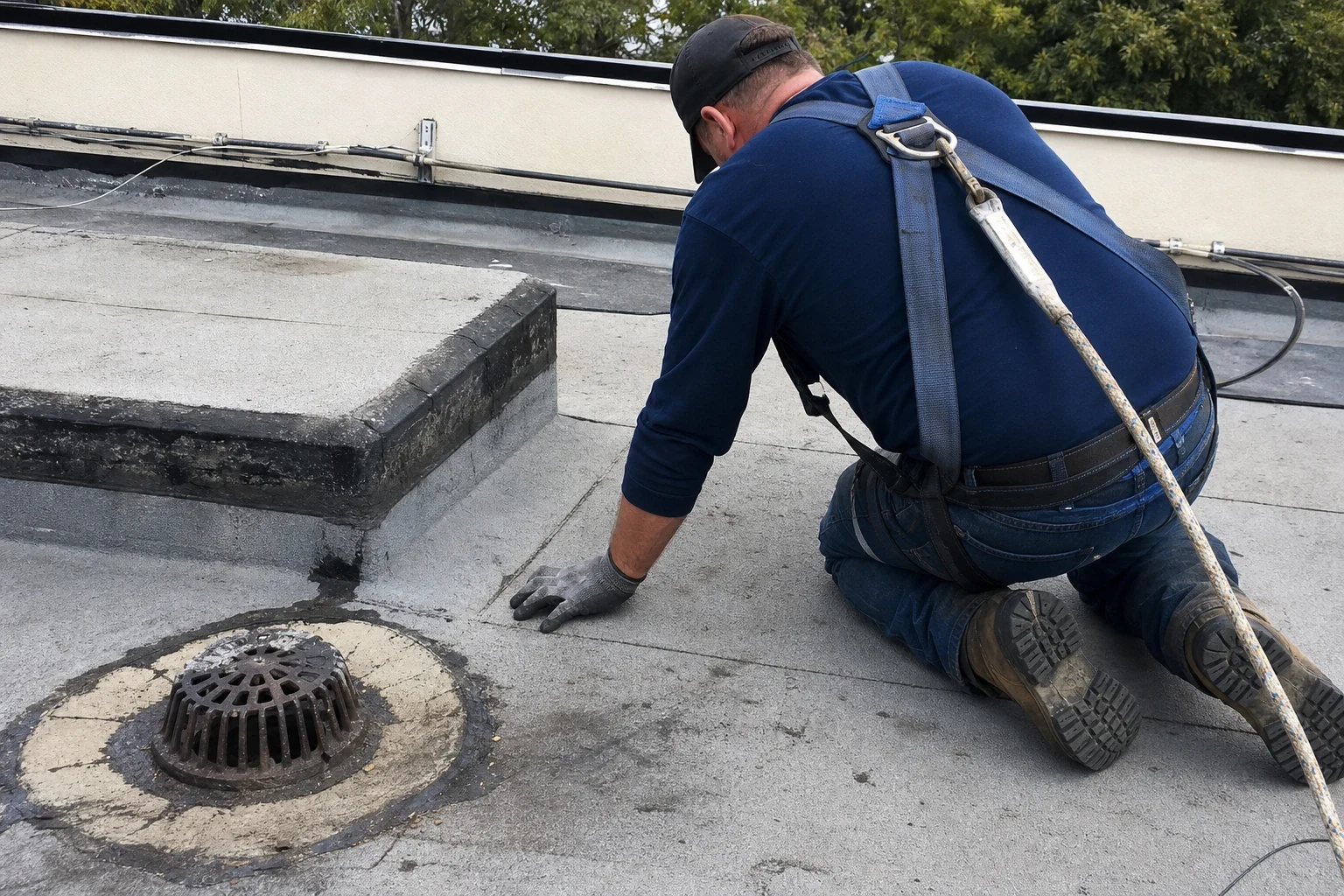
During the free inspection we press into any area that feels soft, look over every drain and flashing detail, and photograph what we find. The free written estimate that follows names the membrane, the insulation and any decking we expect to replace.
- 2
Permit and materials
Our office handles the permit application and orders the membrane in the reflective color your job calls for. You'll have a start date ahead of time, along with how many days the roof will be uncovered.
- 3
Old layers off, deck made sound
The crew strips the roof one section at a time, small enough to seal back up before the end of each day. Soft or broken decking gets swapped out, then tapered insulation or crickets are set wherever water has been pooling.
- 4
New membrane, flashing and a clean yard
Each seam is welded or torched, then checked with a probe tool. We flash the edges and every pipe or vent, run water through the drains to confirm flow, and sweep the property for nails ahead of the city's final inspection.
Where a Flat Roof Price Comes From
Roof area tells only part of the story. The larger differences come from what sits under the surface and how the roof sheds water right now. Every item below appears as a separate line on your written estimate, so no cost gets buried in a single total. To pay over time, ask about plans through Service Finance Company, subject to credit approval.
- Which membrane you pick
- Coating a sound roof is the lowest first cost. TPO and modified bitumen run higher and last longer, and a heavier sheet raises both the price and the years of service.
- How much comes off
- One old layer strips off fast. Two or three layers of tar and gravel mean more hours and more haul-away.
- What the deck and insulation look like
- Any rotted sheathing or soaked insulation gets replaced before the new roof is laid. You see pictures of whatever turns up.
- Fixing how water drains
- Crickets, tapered insulation, added drains or new scuppers add to the total, and they stop the ponding that wears a membrane out early.
- Reach and roof transitions
- The joint where a flat section meets a pitched shingle or tile roof needs careful flashing, and that takes extra time.
Flat Roofing Questions
- Which is better for my home, TPO or modified bitumen?
- TPO reflects more heat and its welded seams resist leaks well, so it suits roofs over living space. Modified bitumen is tougher under foot traffic and around tight corners, which helps on roof decks and on roofs crowded with equipment. We recommend one after seeing your roof, and we'll tell you why.
- Can you just coat my existing flat roof?
- Sometimes. A coating works when the existing membrane is dry, well attached and mostly intact. If we find wet insulation or soft decking, a coating would seal the moisture in, and we'll say so.
- Will a white roof really keep the room below cooler?
- A reflective membrane absorbs far less heat than dark asphalt, so the deck and the ceiling below run cooler on sunny days. The difference is most noticeable over rooms with little attic space between the roof and the ceiling.
- Does insurance cover a flat roof replacement?
- Policies generally pay for sudden damage, such as a fallen limb or a membrane torn loose by wind, and not for wear that comes with age. We work directly with your insurance claim, measuring the roof and recording the damage in pictures so the adjuster has a clear file. The coverage decision still belongs to your adjuster.
Find Out Which Flat Roof Material Fits
We'll check the membrane, the deck and the drainage, then put the options and their trade-offs in writing. We serve Norwalk and nearby towns like Downey, Bellflower and Cerritos.