ServicesRoof Replacement
Roof Replacement in Norwalk With the Right Roof Picked for Your Home
When patches stop holding and the decking has gone soft, a new roof is the fix that lasts. We strip to the sheathing, repair what we find, then help you choose asphalt shingle, concrete tile or a low-slope membrane based on how each performs on a house like yours.
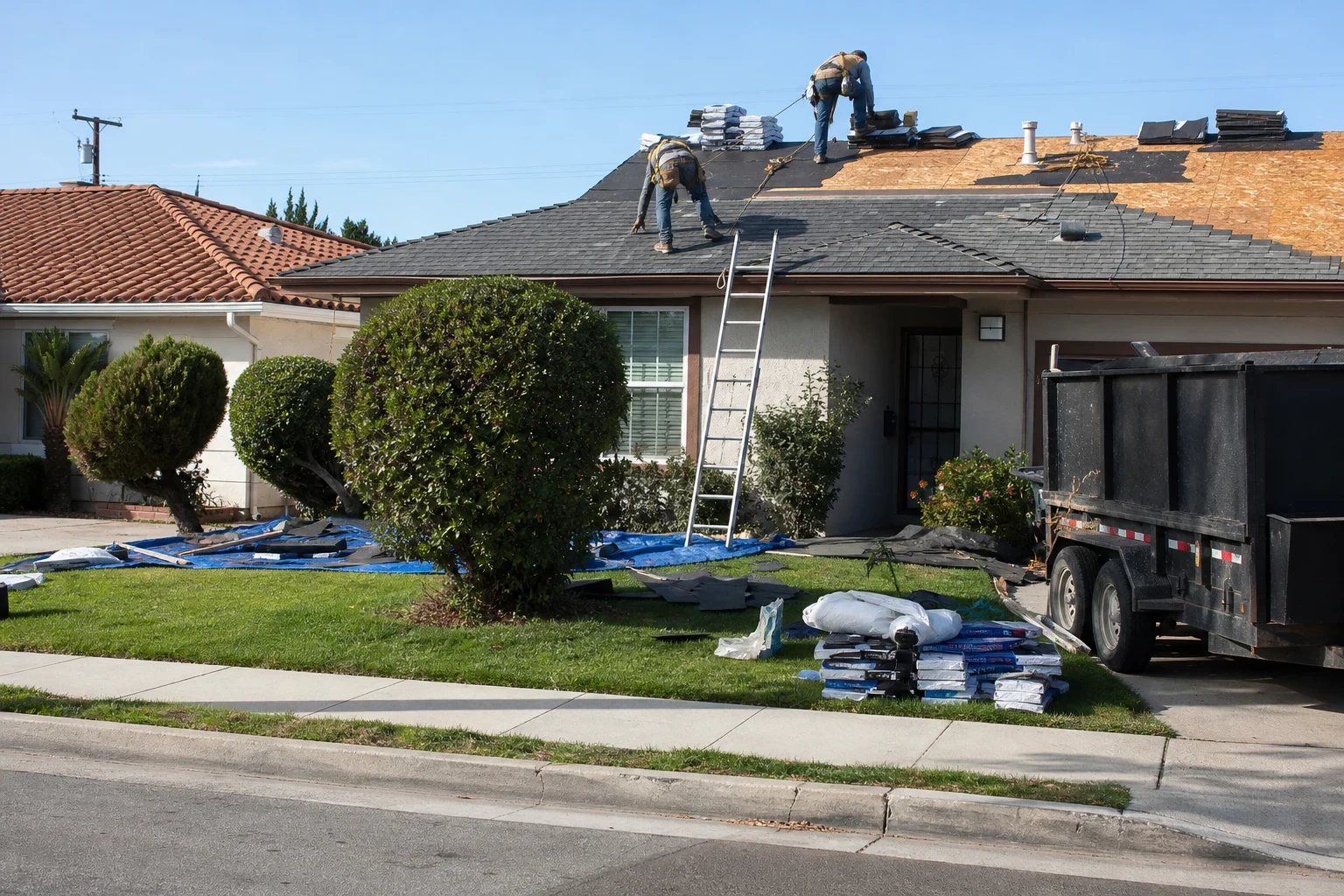
When a New Roof Beats Another Repair
A repair makes sense when the problem is local: a lifted shingle, a cracked tile, one tired pipe boot. Replacement makes sense when the roof is failing everywhere at once. Shingles that have lost their granules can no longer shield the asphalt from UV, and once the asphalt dries out it cracks across the whole field, not in one spot.
Many houses in Norwalk and nearby towns like Downey and Bellflower were built in the 1950s and 60s, and some now carry a second layer of shingles over the first. Layered roofs trap heat, hide rotten decking and add weight the framing was never sized for. A tear-off lets us see the boards and fix them before anything new goes down.
Choosing the new roof is where most people want help. Architectural shingles are lighter and cost less up front. Concrete tile lasts far longer but weighs several times more per square, so we check the rafters first. Low-slope sections over patios and additions need a membrane, not shingles. We lay out those trade-offs on your actual roof so the decision is yours and it is an informed one.
What Goes Into Your New Roof
- Old roofing stripped off
- Every layer of shingles, felt and old nails comes off until bare sheathing shows. Before the first bundle of debris drops, tarps cover the planting beds and lean against the walls to catch it.
- Decking repair and re-nailing
- Delaminated plywood, rotted plank boards and soft spots around old leaks get cut out and replaced. Sound sheathing is re-nailed to the rafters so the new roof has a solid base.
- Synthetic underlayment
- A synthetic underlayment goes down over the whole deck. It resists tearing and does not wrinkle in summer heat the way old felt paper does, which matters most under tile, where the underlayment does the real waterproofing.
- New flashing, not reused
- Drip edge, step flashing at walls, pipe boots and chimney or skylight flashing are replaced. Old metal is usually bent, rusted or sealed with layers of mastic, and it is the most common place a new roof leaks if it is reused.
- Ventilation checked and balanced
- We look at soffit intake and ridge or roof vents together. A hot, poorly vented attic bakes shingles from below and shortens their life, so we correct the balance as part of the job.
- Permit, inspection and cleanup
- We pull the reroof permit and schedule the city inspection. Each day ends with debris hauled off and a magnetic sweep of the driveway, lawn and beds for nails.
Signs Your Roof Is Due for Replacement
Granules in the gutters
Sand-like grit collecting in the gutters or at downspout outlets means the shingles are shedding their UV protection. Bare asphalt dries and cracks quickly under strong sun.
Curling, cupping or cracking shingles
Edges that lift or centers that sink show the shingle has lost its flexibility. Wind gets under curled tabs and lifts them, and nails start to back out.
Stains showing up in several rooms
A single drip usually traces back to one flashing or one boot. When ceiling spots turn up in different rooms year after year, the underlayment beneath the whole field has usually given out.
Tired underlayment under tile
Concrete tile often outlasts the felt beneath it. If tiles look fine but water still gets in, the underlayment is likely brittle and the tile needs to be lifted and relaid over new material.
A sagging or spongy deck
A dip along the ridge or soft feel underfoot means the sheathing or framing has taken on water. That calls for opening the roof, not covering it.
What Moves the Price of a New Roof
We set a price only after measuring your roof and seeing its condition up close. Your written estimate separates the job into line items. The decking allowance is listed on its own line, so you can see exactly how any extra board replacement would be charged.
Size and pitch
Roofers measure in squares, and one square covers 100 square feet. A steep pitch calls for harnesses, roof jacks and careful footing, which adds labor hours to the job.
The roof you choose
Architectural shingles, concrete tile and low-slope membranes differ in material cost and labor. Tile also adds weight, which can mean a framing check before work begins.
What is under the old roof
Extra layers to remove and rotten sheathing to replace add labor and material. We cannot see every board until tear-off, which is why the allowance is written into the estimate.
Roof details
Chimneys, skylights, valleys and walls that meet the roof all need flashing work. A simple gable costs less per square than a cut-up hip roof with several penetrations.
How Your Replacement Runs, Start to Finish
- 1
Free inspection and material talk
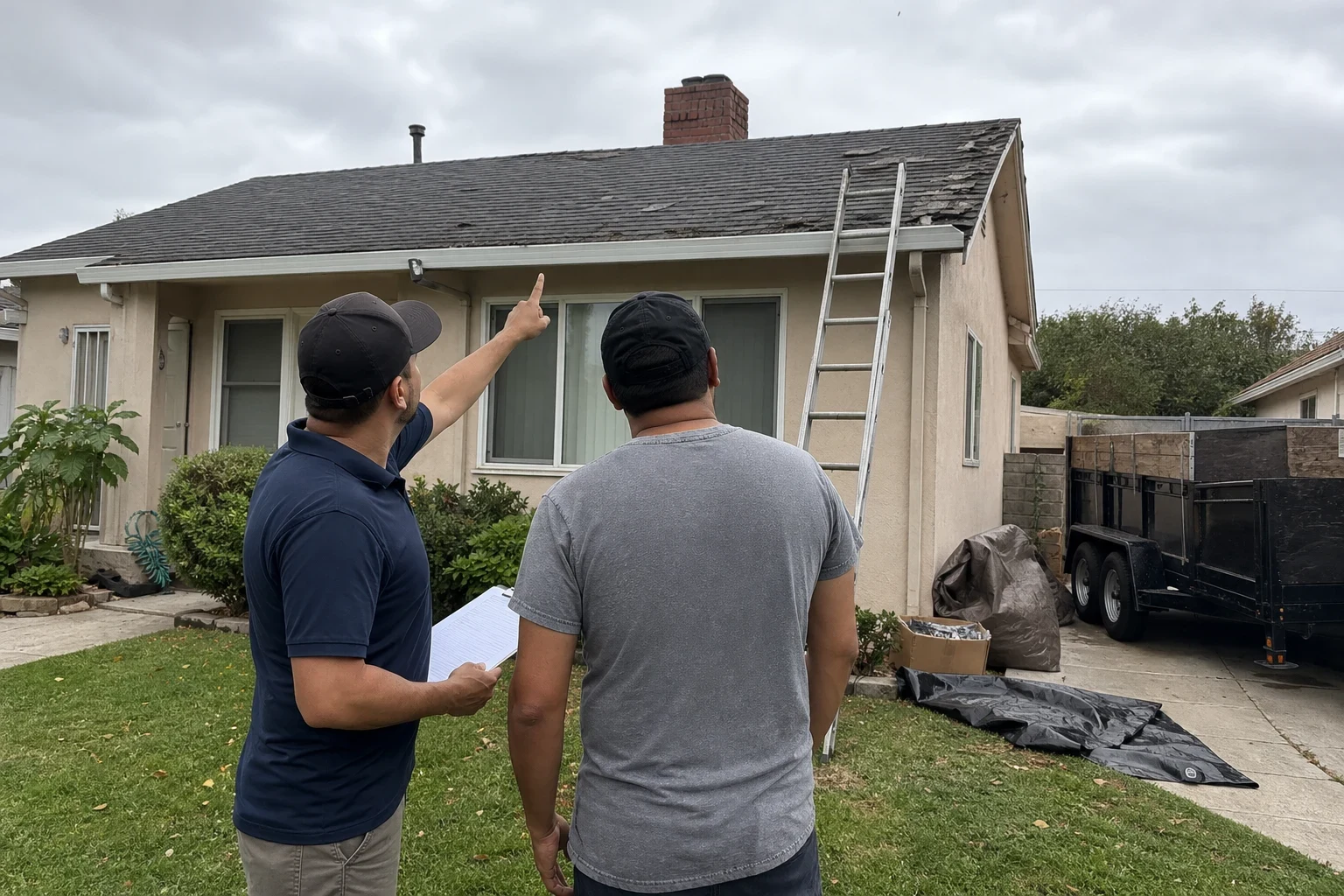
We climb the roof, check the attic when there is a hatch, and take pictures of every problem area. Afterward we go over those pictures with you and compare the roofs that fit your pitch and framing.
- 2
Free written estimate and permit
You get a written estimate that lists tear-off, decking allowance, underlayment, flashing, ventilation and the finished roof. Once you approve it, we file for the permit and set a start date.
- 3
Tear-off and deck day
The old roof comes off one section at a time, so open deck is never left exposed overnight. Decking repairs are made the same day they are found, and we show you any damage before it is covered.
- 4
Installation
Underlayment, flashing, vents and the new roof go on in that order. Shingle roofs on a typical single-story house often finish in a few days, while tile and roofs with more detail take longer.
- 5
Final sign-off and review
Once the inspector approves the work, we go over the finished roof with you, point out the new flashing and vents, and explain what to keep an eye on over the years. The magnet runs across the yard one last time before we pack up.
Questions About Replacing a Roof
Is it OK to lay new shingles over the old roof?
Our advice is a complete tear-off. Laying over the old roof covers up soft decking and worn flashing, puts on extra weight and holds heat that ages the new shingles faster. Taking the old layers off is the only way to confirm the deck is solid.
Can my shingle roof be changed to concrete tile?
In many cases, yes. Tile is much heavier than shingles, though, so we inspect the rafters and sheathing first. Some homes need extra framing before tile can go on, and we explain what that means before you decide.
Does insurance cover a roof replacement?
That hinges on what caused the damage. A sudden event, like wind or a fallen limb, may be covered, while age and wear normally are not. When you have a claim, we work with it directly and supply photos and the scope of work, but the adjuster decides coverage.
Will my house sit open without a roof?
Not overnight. Each day we only remove what we can cover with underlayment before we leave, so your home stays protected even on a job that lasts several days.
Can the cost be spread into payments?
Yes. Service Finance Company offers financing, subject to credit approval. We will go over how it works when we review your written estimate together.
Find Out Which Roof Fits Your House
We will inspect the roof, check the decking and framing, and compare your options on paper. You decide with the facts in front of you.