ServicesRoof Inspections
Roof Inspections in Norwalk That Start With What Your Roof Is Made Of
We inspect your roof according to what it is made of: asphalt shingle, concrete or clay tile, or a low-slope cap sheet. Each one wears out differently, so we check the parts that fail on yours and explain what we found before anyone talks about cost.
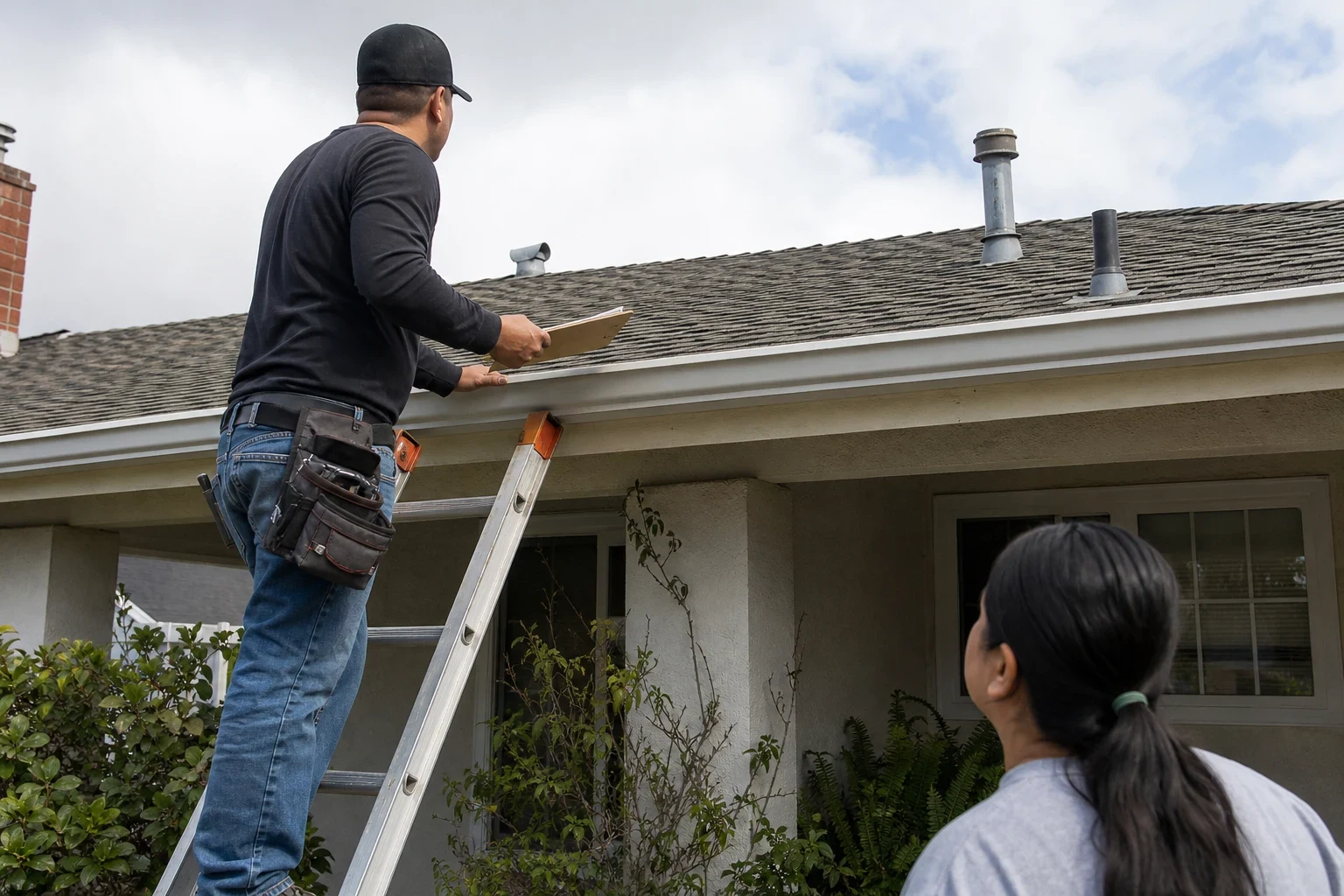
Why an Inspection Comes Before Any Repair
During an inspection we examine the roof covering, the flashing and the vents, and we look at the decking from the attic side wherever access allows. You come away with a clear answer: the roof is sound, it needs a specific repair, or it is near the end of its service life.
Material decides where we look. On asphalt shingles we check granule loss, cracked tabs and lifted edges. On tile, the tiles often outlast the felt underlayment beneath them, so a roof that looks fine from the street can be leaking at the battens. Low-slope sections over patios and additions usually fail at seams and where the roof meets a wall.
The inspection is free. It is worth scheduling when a home is changing hands, once a hard wind has passed, when a ceiling stain shows up, or when your roof is past 15 years and nobody has been up there in a while.
What We Check on Every Inspection
- Roof covering condition
- We walk or examine every slope and note broken, slipped or missing tiles, curled or bare shingles, and blisters or splits in cap sheet. Each problem gets a location, not just a general remark.
- Flashing and penetrations
- Chimney flashing, step flashing at sidewalls, pipe boots and vent collars are where most leaks start. We look for rusted metal, cracked rubber boots and old mastic that has dried and pulled away.
- Underlayment on tile roofs
- Where tiles can be lifted safely, we check the felt beneath for brittleness and tears. On older tile roofs this layer is often the real reason for a leak.
- Attic and decking
- From inside the attic we look for water staining on the sheathing, soft spots, daylight at nail holes and signs of poor ventilation such as heat-darkened wood.
- Gutters and drainage
- We check that gutters are pitched toward downspouts, free of debris and fastened tight, because overflow at the eaves rots fascia boards and the first course of decking.
Signs Your Roof Is Due for an Inspection
Shingle grit in the gutters
As asphalt shingles age, their mineral coating wears off and washes down the roof. A heavy layer of that grit in gutters or at downspout outlets means the asphalt beneath is now taking direct sun.
Cracked or shifted tiles
A single broken concrete or clay tile lets water reach the underlayment directly. Tiles that have slid down a course leave a gap you can sometimes see from the yard.
Ceiling or wall stains
Brown rings on a ceiling usually mean water has been getting in for some time. The entry point is often several feet uphill from the stain.
After a windy stretch
Strong winter winds lift shingle edges and loosen ridge caps. A quick check afterward catches lifted pieces before the next rain.
Buying, selling or refinancing
A clear record of the roof's condition helps you plan, price and answer questions from buyers or lenders.
No one has looked in years
Sealants, pipe boots and underlayment age quietly. Finding them early usually means a smaller repair.
The Inspection Is Free. Here Is What Moves the Cost After It
We do not charge for the inspection itself. If it turns up work, the estimate depends on what the roof is made of and what is happening underneath. Every estimate is written out by line so you can see where the cost comes from. If it helps your budget, financing through Service Finance Company is offered, subject to credit approval.
Tile and shingle sourcing
Matching a discontinued clay tile or a specific shingle color takes more searching than a standard concrete tile or architectural shingle. Labor differs too, since tile has to be lifted and reset by hand.
How far the damage reaches
A cracked pipe boot is a small repair. Rotted decking or failed tile underlayment across a full slope is a larger job, and the inspection tells us which one you have.
Roof height and layout
A steep pitch, a second-story eave or a narrow walkway beside the house calls for more fall protection, more ladder moves and more hours on site.
Permits
Re-roofing and larger repairs often require a city permit and inspection. When a permit is needed, we include it in the estimate.
How the Inspection Goes
- 1
A short call first
When you call, we ask about the roof's age, what it is covered with and anything you have noticed. Then we set a time that works for you. We speak English and Spanish.
- 2
Outside and on the roof
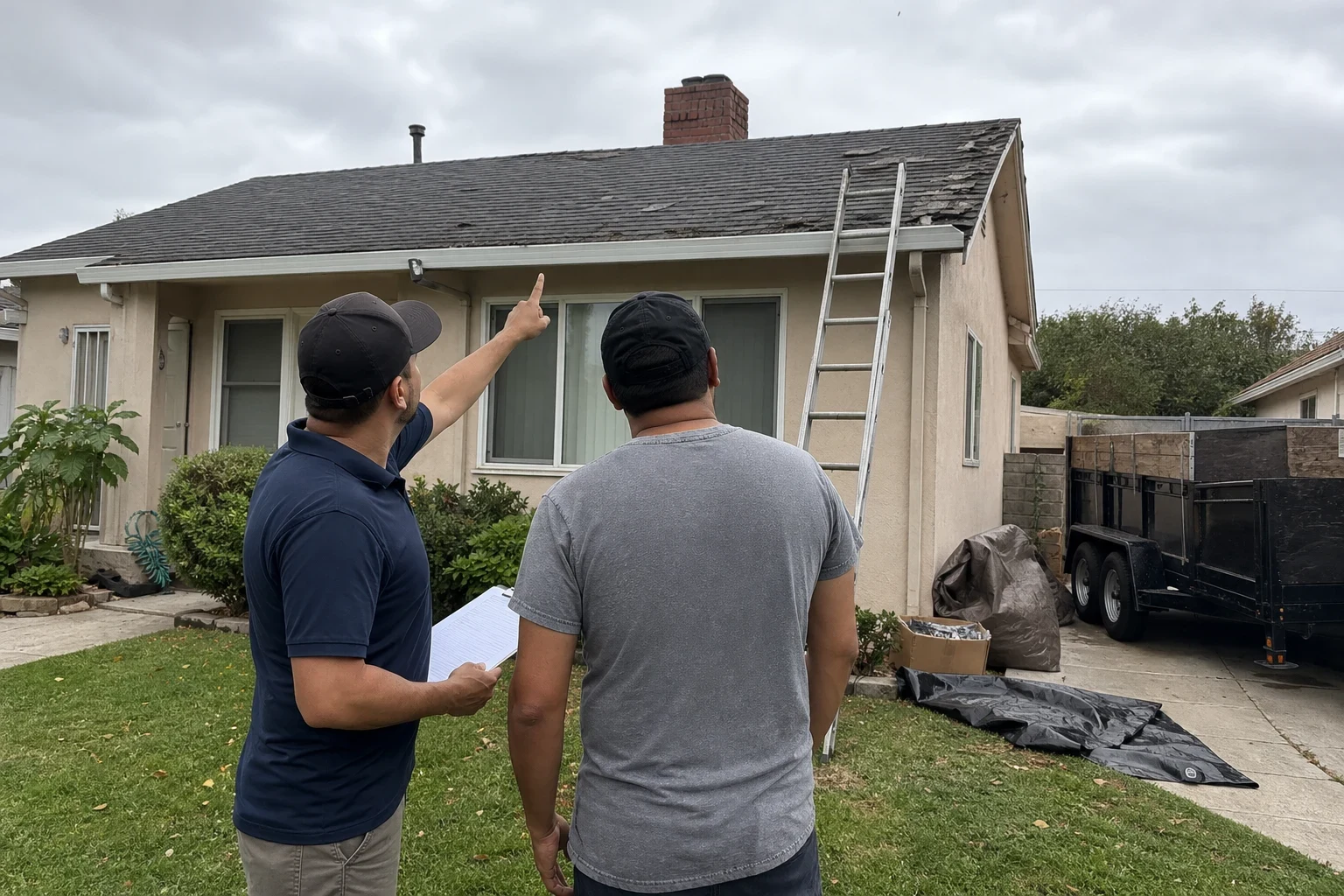
We check the eaves, gutters and fascia from the ground, then go up if the pitch and roofing allow it safely. On tile we step carefully on the lower edge of each tile to avoid cracking it.
- 3
Under the roof deck
With your permission, we climb through the attic hatch to study the underside of the sheathing, the insulation and the vents. Any stain gets traced upslope toward the spot where water first got through.
- 4
Findings, explained
We go over what we saw, show you photos of each problem and explain the cause. If repair is needed, we give you a free written estimate; if the roof is sound, we tell you that too.
Roof Inspection Questions
How long does a roof inspection take?
Most take about an hour for a typical single-story home. Tile roofs, steep pitches and attic access can add time. We would rather take longer than miss a flashing detail.
Is attic access part of the inspection?
We ask for it whenever we can get it. Staining on the underside of the decking often reveals a leak that leaves no visible mark on the roof surface. If the hatch is blocked or there is no attic space, we write that down and inspect everything else within reach.
Will walking on my tile roof break tiles?
Clay and concrete tiles can crack under poor footing. We step on the lower, supported part of each tile and avoid the thin edges. If any tile is cracked during the inspection, we point it out to you.
Can an inspection help with an insurance claim?
Yes. We photograph and write up any wind or impact damage, and we work with your insurance claim directly, sharing that record when it is needed. Coverage is still the adjuster's decision, but solid evidence of what happened makes that conversation easier.
Will you pressure me into a new roof?
No. Many roofs need a repair, not a replacement, and some need nothing. We explain the condition of each layer so you can decide, and if replacement makes sense, our Roof Replacement page covers the material options.
Find Out What Your Roof Is Really Doing
We check your roofing, flashing and attic, then explain what we found and why it matters for your material. You get photos and a written estimate if work is needed.