ServicesTile Roofing
Tile Roofing in Norwalk, Clay and Concrete Done Right
A tile roof is only as good as the layer under it. We install clay and concrete tile, replace cracked and slipped pieces, and relay sound tile over new underlayment. You get a clear answer on which tile you have and what it needs.
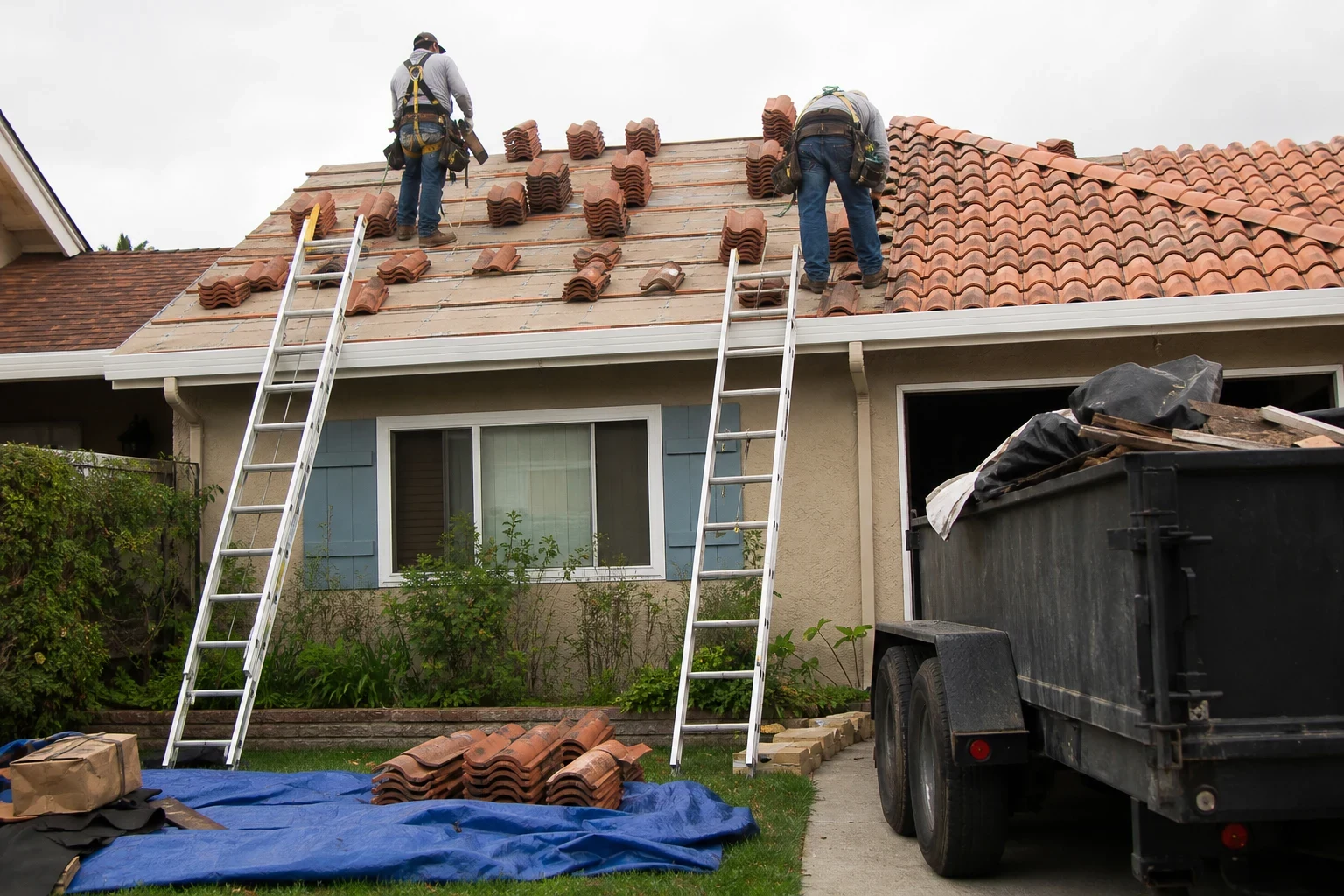
Why the layer under the tile matters most
Clay and concrete tile can serve for generations, and the tile itself seldom gives out. It turns away most of the water, but runoff and wind-blown rain always reach beneath it, and the underlayment is what stops that water from entering your home. Older roofs usually have asphalt felt there, and it dries, stiffens and tears well before the tile is worn.
So most of our tile work takes place beneath the tile. We check the underlayment, the wood battens holding the tile, the flashing at walls and valleys, and the bird stop along the eaves. Then we do what the roof needs: a new tile roof, a repair of broken or slipped tiles, or a lift-and-relay, where sound tile comes up, fresh underlayment goes down and the same tile is laid back.
Clay and concrete do not age alike. Fired clay holds its color for its whole life but breaks under a careless step. Concrete is cheaper and handles foot traffic better, but it weighs more, its color is only a surface coating that fades, and it takes on more water over the years. We will identify which tile you have and explain what that means for a repair or a replacement.
Tile work we handle
Lift-and-relay
We remove the tile, stack it, tear off the old felt and install new underlayment, then reset the original tile. Pieces that crack during removal are replaced with matching tile. It is often the best value on a roof whose tile is still sound.
New clay or concrete tile roofs
Full tear-off down to the deck, deck repairs where boards are soft, new underlayment, battens, flashing and tile. We go over S-tile, barrel and flat profiles with you before you choose.
Broken and slipped tile repair
Cracked tiles let sun and water reach the underlayment. We pull the damaged pieces, check the felt beneath, and set replacements with the right fastener or clip so they sit flush with their neighbors.
Ridge, hip and valley work
Mortared ridges crack and shed chunks over time. We repoint or rebuild them, or switch to a dry ridge system with a vented closure, and we replace rusted valley metal while the tile is up.
Structural check before switching to tile
Concrete tile weighs several times more than asphalt shingles. If you want tile on a house built for shingles, we check the rafters and decking first and tell you plainly whether framing work is needed.
Signs your tile roof needs attention
Cracked, chipped or slipped tiles
A tile out of line or missing a corner exposes the underlayment to direct sun, which breaks it down quickly.
Ceiling stains under a roof that looks fine
When the tile looks intact but water still gets in, the underlayment or flashing has usually failed. Replacing tiles alone will not stop it.
Brittle felt showing at the eaves
The strip of felt visible along the bottom edge is a preview of the whole roof. If it flakes apart between your fingers, the felt farther up the slope has almost certainly aged the same way.
Crumbling ridge mortar
Loose mortar at the ridge and hips lets water and pests in, and broken chunks can slide down and crack tiles below.
Chalky, faded concrete tile
Once the surface coat wears away, concrete tile soaks up more water and gets heavier and weaker. Sealing may help for a while. Sometimes replacement is the honest answer.
How a tile job runs
- 1
Inspection on the roof
We walk tile the right way, stepping on the lower third of each piece where it rests on the one below, so we do not crack what we came to check. We lift tiles in a few spots to see the underlayment and photograph what we find.
- 2
Written estimate with options
You get a free written estimate that compares repair, lift-and-relay and new tile where each makes sense, plus how much of your tile we expect to reuse and whether matching pieces are available.
- 3
Permit and tear-off
For reroof and relay jobs we pull the permit. Tile is stacked on the roof or on protected ground, the old felt comes off, and the deck and battens are checked before anything new goes down.
- 4
Underlayment, tile and cleanup
New underlayment, flashing and battens go in, then the tile is reset and the ridge finished. Our crew sweeps the grass, flower beds and drive with a nail magnet to pick up loose fasteners, and the torn-off felt and broken tile are hauled away with us.
What moves the price of tile roofing
Tile jobs vary more than shingle jobs because so much depends on what is reusable and what is hidden under the tile. Your written estimate breaks the work into separate items, such as underlayment, replacement tile and flashing, so every cost has a reason beside it. If you would rather spread the cost out, Service Finance Company offers financing, subject to credit approval.
- Roof size, pitch and shape
- Steeper pitches and roofs with many valleys and hips take more labor to strip and relay, and more cut tile at the edges.
- Reusable tile and matching
- Clay often survives removal well. Older concrete tile breaks more. Discontinued profiles and colors can take time to source or may need salvaged pieces.
- Underlayment and batten choice
- Two-ply felt, synthetic and self-adhered membranes differ in cost and lifespan. Rotted battens and soft decking add material and labor.
- Flashing and ridge details
- Chimneys, skylights, wall transitions and a full ridge rebuild each add time, and they are the spots most likely to leak if done cheaply.
Tile roofing questions
Something not covered here? (562) 534-3894
Can my existing tiles be reused?
Often, yes. Clay tile in good shape usually goes right back on. Concrete tile that has gone porous or brittle breaks more during removal, so we estimate the loss up front and source matching pieces for the gaps.
Should I choose clay or concrete tile?
Clay costs more, keeps its color and weighs less than most concrete tile, but it is more fragile underfoot. Concrete is less expensive and sturdier to walk on, though its color fades and it gets heavier as it absorbs water. We compare both on your own roof before you decide.
Why is my tile roof leaking when no tiles are broken?
Tile is not a watertight layer. Water always gets beneath it, and the underlayment carries that water to the eaves. When the felt cracks or the valley metal rusts through, you get leaks under tile that looks perfect from the street.
Can you put tile on a house that has shingles now?
Sometimes. Tile is much heavier than asphalt shingles, so we check the rafters, spans and decking first. If the framing needs reinforcement we tell you before you commit, and if it does not make sense we will point you to asphalt shingle roofing instead.
Will you help with an insurance claim for tile damage?
We work directly with your insurance claim. We document the broken tile and any underlayment damage in photos, walk you through what we found, and can be there when the adjuster comes out to inspect. Whether the damage is covered is the insurer's call, not ours.
See what sits beneath your tile
We lift a few tiles, look at the underlayment and flashing, and show you pictures of what turns up. We can talk it through in English or Spanish.