ServicesGutters
Norwalk Gutters, Matched to the Roof That Drains Into Them
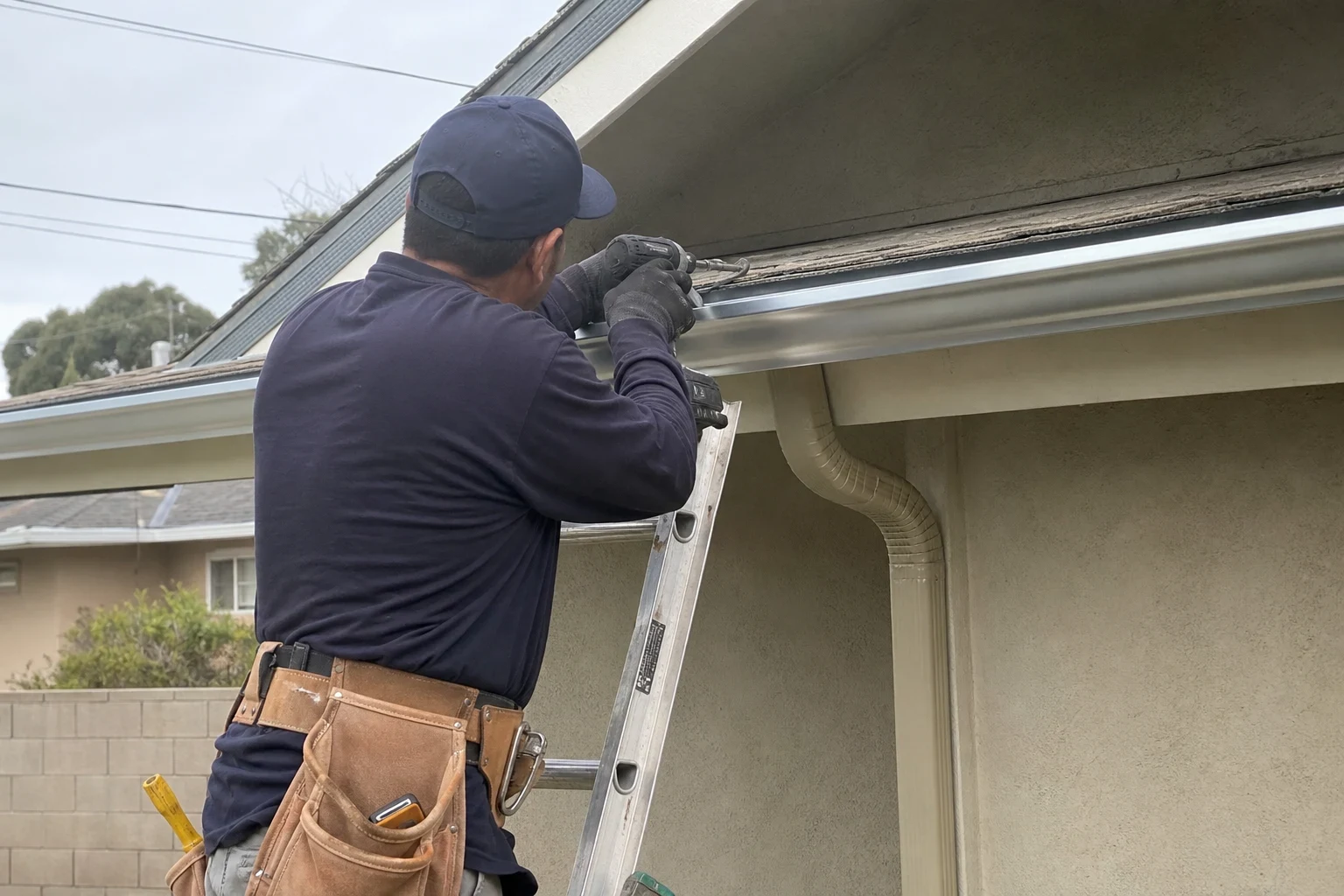
We install and repair gutters that move water off your home and away from the walls. Continuous aluminum, steel or copper, each sized to the roof area that drains into it and hung with a steady fall to the outlet. We look at the fascia behind them first, since that board carries the whole load.
What a gutter system has to do
A gutter is a trough, a set of hangers and a few downspouts, and each part has to be right. The trough needs enough capacity for the roof area draining into it. It needs a slope of about a quarter inch per ten feet toward the outlet. And the hangers must be close enough that a full load of water and wet leaves does not pull it off the fascia. Miss one of those and water spills over the front, runs behind the gutter or sits in a sag.
Rain here is rare, then heavy. Gutters sit dry and dusty for months, fill with leaves and grit through the fall winds, then get tested by a winter storm that drops an inch in an afternoon. We size and hang them for that burst, not for an average day.
The first decision is the metal, and aluminum, steel and copper each behave differently over time. We lay out the trade-offs on site, standing at your own roof edge, before you choose.
Gutter materials and work we handle
- Continuous aluminum K-style
- We roll each run from a coil right at your house, cut to the length of the wall, so a joint only appears where the gutter turns a corner or drops into a downspout. Aluminum won't rust, and the baked enamel finish holds its color for years. We hang .027 or .032 gauge, because thinner stock dents the first time a ladder rests against it.
- Galvanized steel
- Heavier and stiffer than aluminum, so it shrugs off ladders and falling branches. The trade-off is rust: once the zinc coating wears through at a scratch or seam, corrosion follows. It makes sense where strength matters more than low upkeep.
- Copper half-round
- Copper lasts for decades and weathers from bright to brown to green. Seams are soldered rather than caulked, which adds labor and cost. It pairs well with Spanish-style homes and clay tile.
- An honest word on vinyl
- Vinyl sections are cheap and easy to snap together. Years of strong sun make them brittle, and the snap joints loosen and drip. For most homes we steer you toward aluminum instead.
- Downspouts and drainage
- We size downspouts to the run, often moving from 2x3 to 3x4 inch on long walls, and add extensions or splash blocks so water lands away from your foundation and stucco.
- Repairs and fascia work
- We re-pitch sagging runs, replace loose spike-and-ferrule fasteners with hidden hangers, reseal end caps and miters, and swap out rotted fascia boards before any new gutter goes up.
Signs your gutters need attention
Overflow at the lip in heavy rain
Water spilling over the front in a downpour points to a trough that is too small, a clog at the outlet, or a run that tilts away from the downspout. That overflow hits the ground at the wall and splashes mud onto the stucco.
Sagging runs and backed-out spikes
Spikes work loose as fascia wood dries and shrinks. Once a few let go, the run sags and holds standing water, and that extra weight pulls the next spikes out.
Dark streaks behind the gutter
Stains or peeling paint on the fascia mean water is getting between the gutter and the board, usually because the drip edge or gutter apron is missing. A board that stays wet will rot.
Drips at seams and corners
Sectional gutters leak at joints once the sealant dries out. Corners and end caps usually fail first.
Washed-out soil near the walls
A downspout that empties right at the house erodes planting beds and lets water sit against the slab. Moving the discharge a few feet often solves it.
What moves the cost of gutters
Gutter pricing depends mostly on how many feet we hang, which metal you choose and the shape of the fascia behind the old system. Each of those gets its own line on the written estimate. If it helps to spread the cost out, financing is available through Service Finance Company, subject to credit approval.
Footage, corners and height
Cost scales with the length of the runs and the number of mitered corners. Second-story walls need taller ladders and more setup time.
Material and gauge
Aluminum is the usual baseline. Heavier aluminum and steel cost more, and copper costs the most because of the metal itself and the soldered seams.
The wood behind the gutter
Hangers are only as strong as the board they screw into, so soft or split fascia gets swapped out first. Some decay stays hidden until the old trough comes down, which is why we flag suspect boards on the estimate before work starts.
Downspouts and drainage
Adding downspouts, upsizing them, or adding extensions and drain connections changes the total.
How a gutter job runs
- 1
Roof edge and fascia check
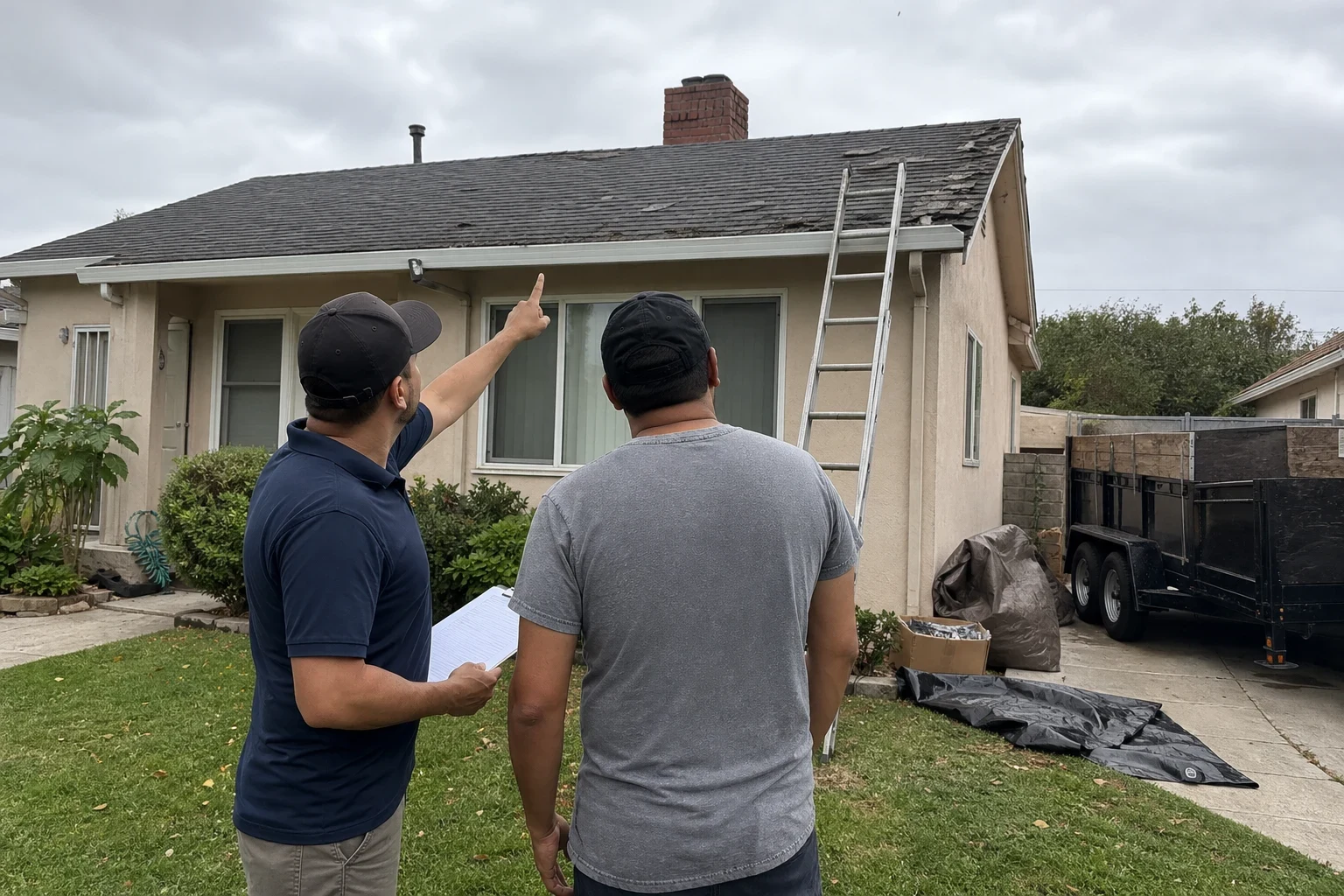
We start on the ladder, not with a catalog. We probe the fascia for soft wood, look at the drip edge and the first course of shingles or tile, and measure each wall and the roof area draining toward it.
- 2
Written estimate with options
You get a free written estimate listing each run, the metal and gauge, the number and size of downspouts, and any fascia to replace. When two options make sense, we price both side by side.
- 3
Removal and prep
We take down the old gutters, pull the spikes, replace rotted fascia and add gutter apron where the roof edge needs it. Old metal and debris go straight into our bin, not your planting beds.
- 4
Forming and hanging
For aluminum, we roll each run to length on site, snap a chalk line for slope and fasten hidden hangers about every two feet. Corners are mitered and sealed, and outlets are cut clean.
- 5
Hose check, then cleanup
Before we pack up, we put water in the far end of each run and watch it travel to the outlet with nothing left pooling. Then we pick up scraps and fasteners and walk the house with you.
Gutter questions we hear
Is a one-piece run better than sectional gutters?
Usually, yes. Sectional gutter comes in ten-foot lengths, and every splice depends on a bead of sealant that bakes, shrinks and starts to drip. A run formed on site to the full wall length only has joints where it turns or meets a downspout, which leaves very little to fail. Both use the same aluminum, so the difference in price is usually small.
What size gutter does my home need?
Most single-story homes do well with 5-inch K-style. Long runs, steep sections or a large roof area draining to one side often call for 6-inch gutters and 3x4 downspouts. We measure the roof area feeding each run and size from that, not from whatever was there before.
Do I need gutter guards?
It depends on what grows above your roof. Homes under trees benefit from screens or covers, while open lots with little debris may not need them. Guards cut down on cleaning but do not end it, and some styles let heavy rain overshoot. We will tell you plainly whether they are worth it for your home.
Can gutters work with a tile roof?
Yes. Tile sits higher and overhangs farther than shingles, so the gutter has to be set at the right height for water off the tile to land in the trough. Painted aluminum and copper half-round both pair well. If the tile itself needs work, our Tile Roofing page covers that.
Should I replace gutters before or after a new roof?
If both are due, plan them together. Roof replacement usually includes new drip edge, and gutters hung before that work may have to come down again. Doing them in sequence saves you paying for the same labor twice.
Get your gutters measured and priced
We will look at your gutters, fascia and roof edge, explain which material suits your home and leave a written estimate.